


- All
- Advertising + Marketing
- Branding
- Case Studies
- Environmental Design + Tradeshows
- Mission-Driven Marketing
- SEO, GEO + Digital Marketing
- Web Design + Development
Is your advertising and marketing strategy working?
Take our short, free audit to assess the strength of your ad and marketing campaigns.
Take Free Audit
Posted by Anya Sleezer
Last Updated on: May 18, 2026
Today’s buyer is more informed than ever before. As consumers ourselves, we believe that’s a good thing. But as marketers, we recognize it’s a challenge. Thanks to the abundance of information available in an instant, the power has shifted from the sales and marketing teams to the buyer.
Which, to be honest, is where it should always belong.
To be successful, marketers must adapt their mindset from selling products to providing value. And the best way to start is learning who the buyer is and the journey they take on their path to purchase. We call this The Buyer’s Journey.
The Buyer’s Journey typically follows three stages: Awareness of a new product or service, consideration of purchasing it, and deciding to buy.
The three stages of Buyer’s Journey
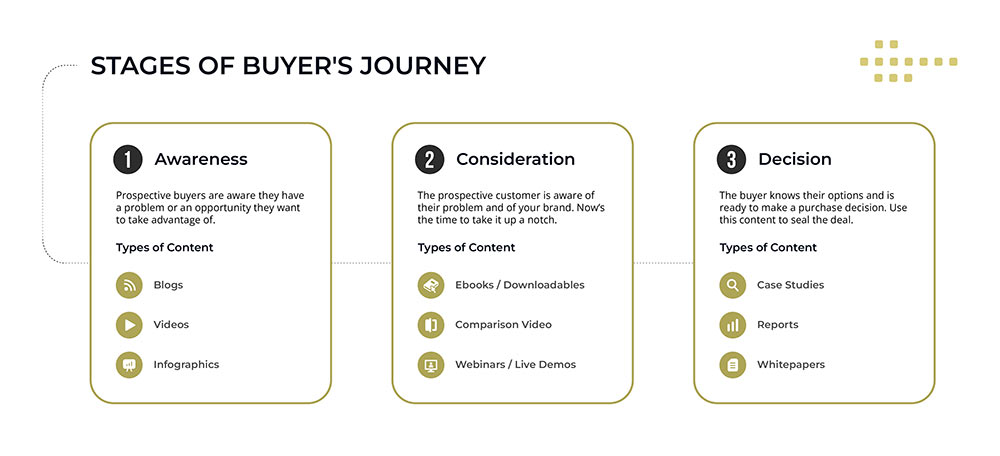
1. Awareness:
Prospective buyers are aware they have a problem or an opportunity they want to take advantage of. Knowing their pain points or desires is critical at this juncture for developing your content.
Types of Content for the Awareness Stage
Blogs: Blogs are a friendly way to engage and inform your audience. They are purely informative, helping to answer questions, solve problems, and provide value. They showcase your expertise and insight, showing the benefit your brand could provide.
Videos: Video has become the most popular way people consume content. Consider the same objectives and content you would for a blog, but produce it in a video instead. You’ll potentially reach a larger audience — and increase your likelihood of more sales. More work on the production side could yield more sales on the backend.
Infographics: Infographics display information in a fun and exciting way with highly engaging, easy-to-understand graphics. Infographics are awesome at this stage because they are easy to consume and easy to share, making them ideal for creating and spreading awareness.
2. Consideration: The prospective customer is aware of their problem or opportunity, and is aware of your brand and its’ potential value. Now’s the time to take your messaging up a notch.
Types of Content for the Consideration Stage
Ebooks / Other Downloadable Resources: Ebooks and other downloadable resources showcase your industry expertise, giving buyers a glimpse into what doing business with your brand would be like. They are a lot of work to produce, so consider charging a small fee. However, even if you offer them for free, the upside may be worth it. Downloadable resources include:
- Ebooks
- Tips sheets
- Guides
- Checklists
- Templates
- Slideshare/Powerpoint Presentations
Comparison Video: With comparison videos, your goal is to show why your product or service is better than your competitors. Don’t shoot shade; just show value. Comparison videos are a great way to answer people’s doubts and show how your product outshines your direct competitors.
Webinars / Live Demonstrations: Bring your prospective buyer into the conversation by presenting your ebook or comparison video content in a live webinar or demonstration. To see if this approach is worth your effort, add a CTA for a live webinar on your other pieces of content and see how many people sign up.
3. Decision: The buyer knows their options and is ready to make a purchase decision. Use this content to seal the deal and make the sale.
Types of Content for the Decision Stage
Whitepapers, Reports, or Case Studies: Before a customer makes their purchase, they’ll want to know more about your success with other customers. Case studies, use cases, reports, and white papers come in handy. This is where you back up any claims with past performance.
Knowing the three stages of the buyer’s journey is important; but knowing how to make them work for you is what matters.
Turn to Tulsa’s best marketing agency and turn prospects into customers. Level up with Levo!
Is your advertising and marketing strategy working?
Take our short, free audit to assess the strength of your ad and marketing campaigns.
Take Free Audit
