

- All
- Advertising + Marketing
- Branding
- Case Studies
- Environmental Design + Tradeshows
- Mission-Driven Marketing
- SEO, GEO + Digital Marketing
- Web Design + Development
How strong is your
brand, really?
Take our short free audit to find out where your brand stands—and how to turn
strategy into impact. (It only takes 2 minutes—and can unlock the clarity your
brand needs to thrive.)

Posted by Anya Sleezer
Last Updated on: November 12, 2026
At A Glance
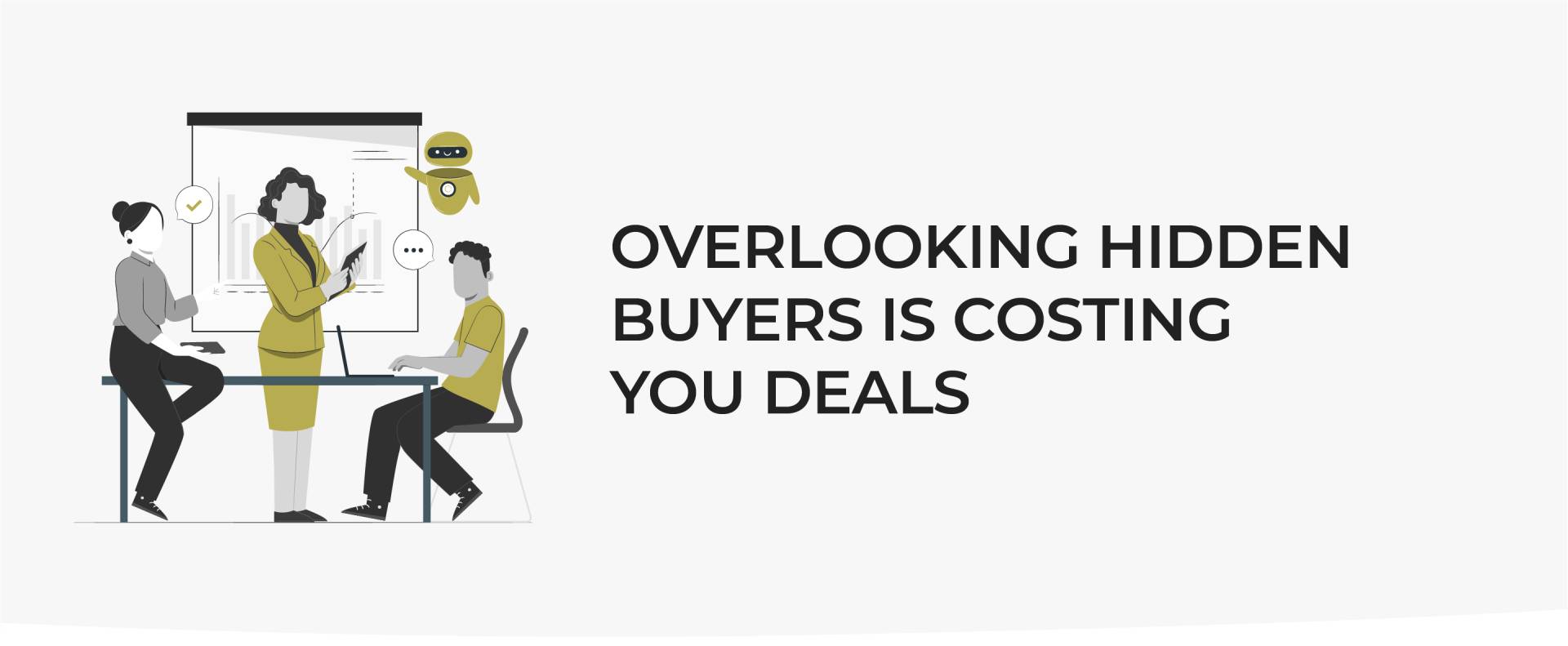
Your marketing can attract the right lead and still leave the people influencing the purchase unconvinced. This article is for marketing leaders, founders, and senior decision makers at midsized businesses who want to improve their marketing. It identifies five hidden buyers, the questions your marketing needs to answer, and how to help your champion make the case when you aren’t in the room. Use the seven question audit to find what is missing from your brand, website, and campaigns.
Table of contents
- The Hidden Buyer Problem: Who Your Marketing Still Needs to Convince
- Your data doesn’t cover everyone who matters
- Meet the five buyers your marketing may be missing
- What your marketing needs to do when you aren’t there
- Seven questions to find the buyers you’re overlooking
- More leads won’t fix missing answers
- Frequently asked questions
- Give every decision maker a reason to say yes
The hidden buyer problem: who your marketing still needs to convince
Your campaign brings in a qualified lead. The first conversation goes well. Your contact understands the value and wants to move forward. Then the proposal goes to finance, operations, or leadership, and the deal stalls.
Why? It could be the hidden buyer gap. Your marketing convinced your contact. But the deal depends on people who never saw it, and you haven’t given your champion the answers they need to convince them.
Try the retelling test: could your champion explain why your company is the right choice to someone who has never heard of you? Could they back up that recommendation when challenged?
If they struggle, look at what you have given them. The positioning may be hard to explain. The proof may be thin. The proposal may leave out something important. Find the gap.
Your data doesn’t cover everyone who matters
Edelman and LinkedIn describe hidden buyers as less visible stakeholders in functions such as finance, legal, procurement, compliance, and operations. In their 2025 research, 71% reported little or no interaction with sales teams. [1]
Your reports capture clicks, forms, and sales conversations. They may miss the finance exec reading a forwarded proposal or the operations lead asking your contact about implementation.
13 + 9
A typical business buying decision includes 13 internal stakeholders and nine external influencers.
Forrester, The State of Business Buying 2026 [2]
Your goal is to identify the actual buying group, and get them the information they need. Map the full buyer’s journey, from the person who starts the search to the people who approve and implement the purchase. Use that map to decide what your brand, website, and campaigns need to explain at each stage.
Meet the five buyers your marketing may be missing
Levo’s Five Hidden Buyers framework helps you look beyond the lead in your CRM. The first three influence the current purchase. The Future Buyer asks you to consider demand beyond today’s opportunities. The Machine Researcher addresses the AI tools people use to evaluate their options.
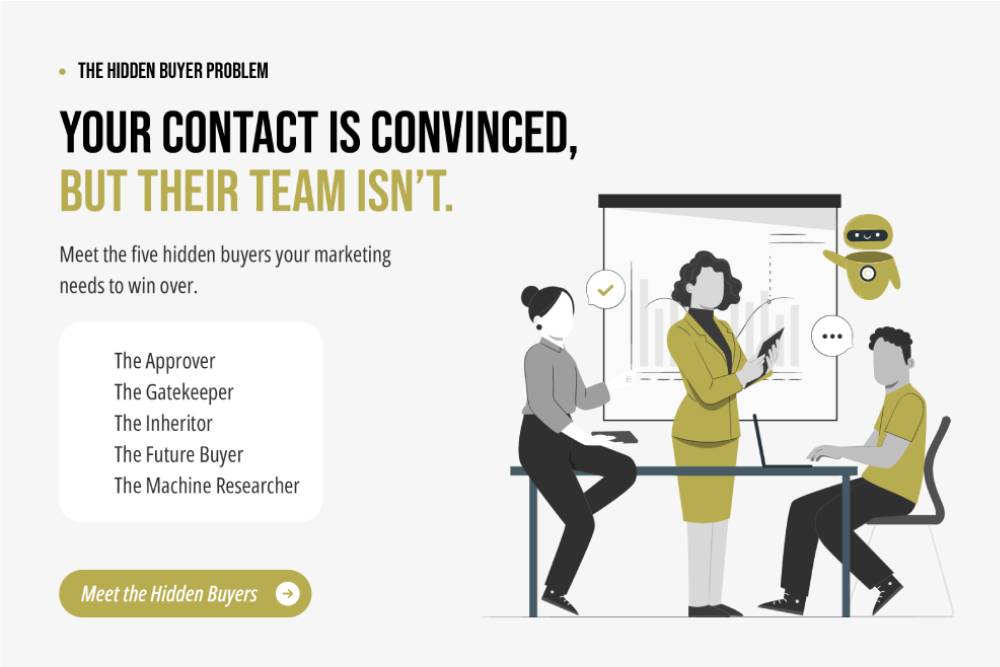
Your contact may be sold, but these five hidden buyers still shape the decision.
1. The Approver
Who they are: The owner, executive, or department leader who decides whether the investment deserves priority.
Their question: “What will this do for the business, and why now?”
What they need: A clear business case, relevant results, and a reason to act. Your champion needs to explain why this investment deserves attention alongside everything else competing for the budget. A list of services or product features won’t make that case for them.
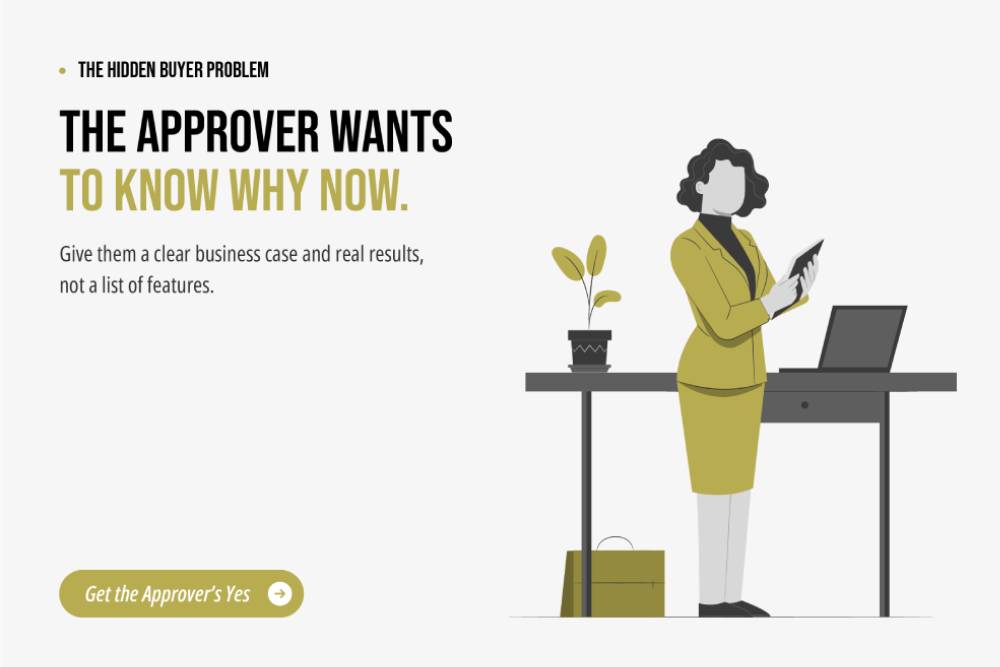
Give the Approver a business case worth prioritizing.
2. The Gatekeeper
Who they are: Finance, procurement, legal, IT, or compliance reviewers who can hold up approval.
Their question: “Does this meet our requirements?”
What they need: Answers specific to their role. Finance needs the total cost and the assumptions behind a return estimate. IT may need integration and security information. Procurement needs scope and terms. Give your champion approved answers and a clear way to request information that needs a private conversation.
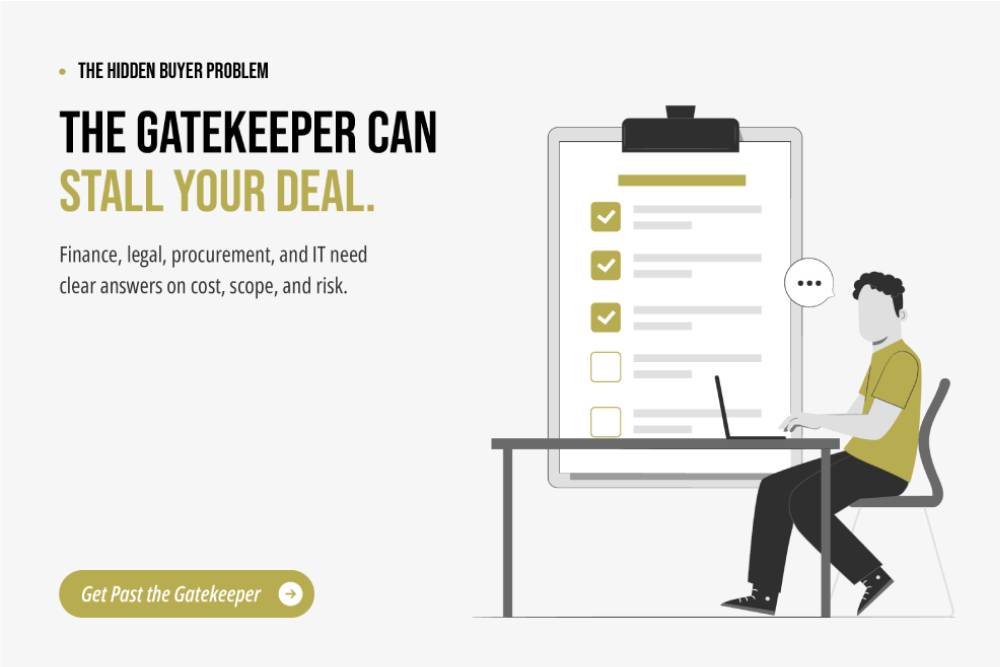
Clear answers on cost, scope, and risk keep the Gatekeeper from holding things up.
3. The Inheritor
Who they are: The team that will use the product, manage the service, or carry out the change.
Their question: “What changes for us, and how much work will it take?”
What they need: An honest explanation of implementation, training, support, and their responsibilities. A promise of greater efficiency is less convincing if nobody explains who handles setup or what happens when something goes wrong. See our MorseLife employer brand case study.
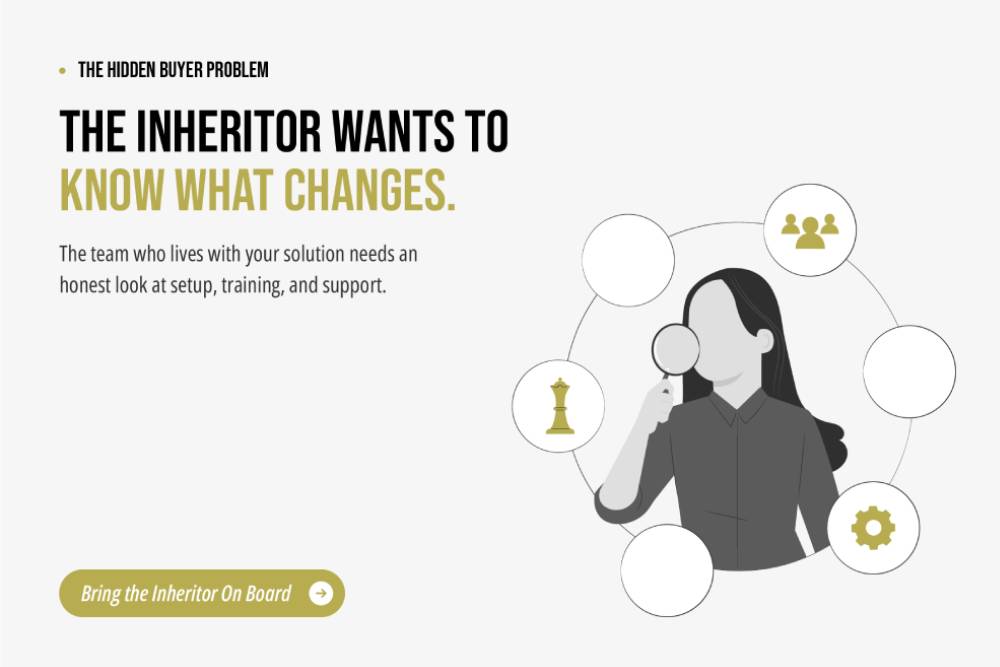
The team who lives with your solution wants an honest look at the work ahead.
4. The Future Buyer
Who they are: Someone who fits your audience but has no reason to buy today.
Their question: “Who should we consider when this becomes a priority?”
What they need: A reason to remember your brand before they need it. The LinkedIn B2B Institute’s 95:5 rule highlights how much of a market can be outside a buying cycle. The exact share depends on the category and purchase frequency. [4] Build familiarity with the problems you solve instead of expecting every useful interaction to produce an immediate lead. For more, read our article on distinctiveness.
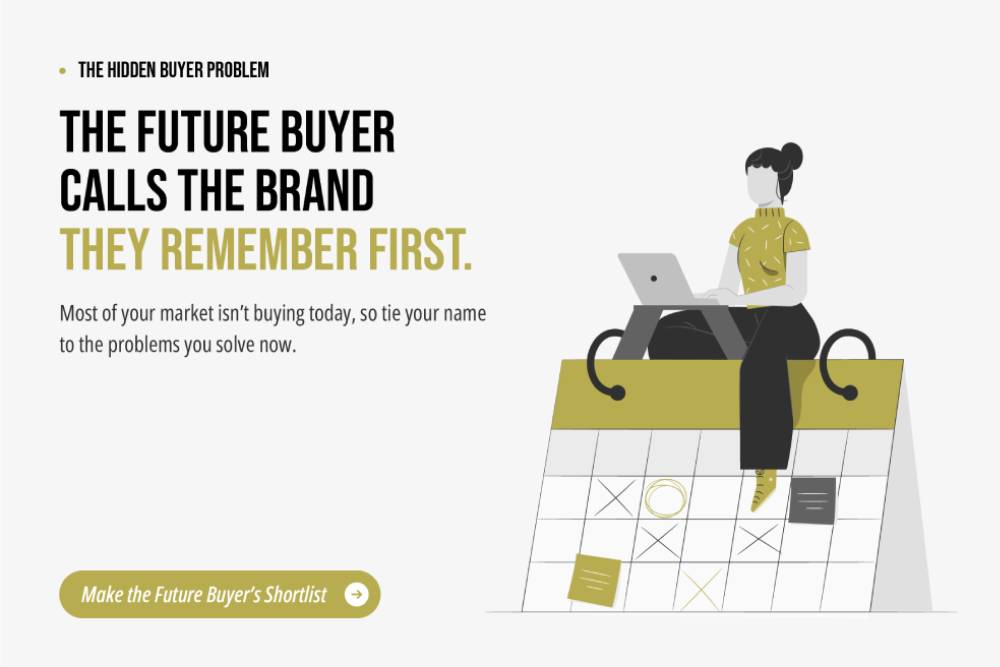
Build familiarity now so you’re the first call when the need shows up.
5. The Machine Researcher
What it is: The AI tool a buyer uses to research suppliers, compare options, or check a claim.
The question it helps answer: “What can we find out about this company?”
What it needs: Clear service descriptions, current company information, and credible evidence. Gartner reported that 45% of 646 surveyed B2B buyers used AI during a recent purchase. [3] People still make the decision, but an inaccurate or incomplete answer can affect what they believe about you. Check out our guide on how to show up in AI Overviews and ChatGPT.
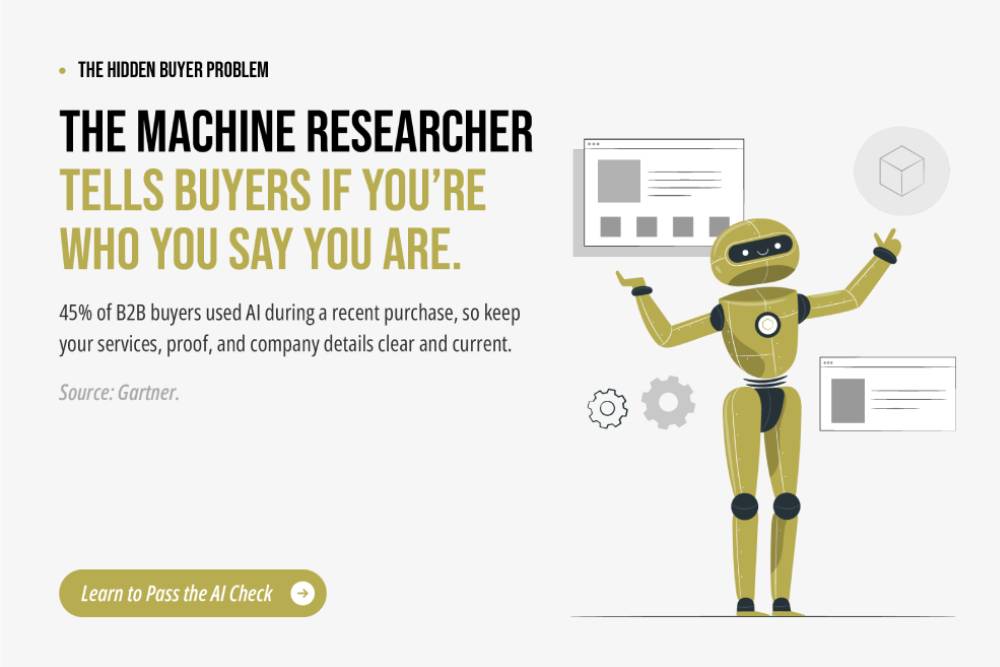
AI tools now help buyers check your claims before they ever reach out.
Use our framework to ask better questions, not to force every purchase into five categories. Ask recent customers who participated, what each person needed, and whether peers or outside advisors influenced the choice.
| Hidden buyer | The question to answer | What to provide |
| The Approver | Why this investment, and why now? | A clear business case and relevant results. |
| The Gatekeeper | Does this meet our requirements? | Cost, scope, terms, and relevant risk answers. |
| The Inheritor | What will change for our team? | Implementation, training, and support details. |
| The Future Buyer | Who should we consider later? | A memorable brand linked to the problem. |
| The Machine Researcher | What can buyers find out about us? | Current descriptions and credible evidence. |
What your marketing needs to do when you aren’t there
Helping your champion starts before the proposal. It belongs in the brief for the brand, website, campaign, and sales materials.
1. Branding: Make your value easy to explain
Your champion should be able to say who you help, what you help them achieve, and why your company is a credible choice. “Innovative solutions” and “exceptional service” leave them with claims nearly any competitor could make.
Keep one clear brand position but give different decision makers the details they need to assess it. Finance and operations may need different answers, but those answers should support the same promise.
Levo’s RallyPoint approach establishes the core belief behind a brand. That clarity gives your champion something consistent to explain. Relevant evidence gives their colleagues a reason to believe it.
2. Website: Answer the questions that hold up approval
Your website is a source your champion can use and share. A service page should make sense to someone who receives the link without the context of your sales conversation.
Make the offer, scope, process, and relevant results easy to find. Explain what working with you requires. Put useful answers near the offer, with links to deeper information and a clear contact route for sensitive details.
You don’t need a page for every job title. You need content that addresses the questions those people ask. Our website planning guide for midsized companies can help you capture those requirements before design begins.
3. Campaigns: Give the buying group reasons to support you
Keep the ad focused. Let the landing page and supporting content answer the questions that follow. A campaign about faster deployment, for example, should lead to evidence about the timeline, effort, and support involved. Our RACE framework guide can help structure that campaign planning.
Where your channels allow, reach other decision makers directly. Publish useful thinking they can discover independently and your champion can forward.
Edelman and LinkedIn found that 79% of hidden buyers said consistent, high-quality thought leadership made them more likely to advocate for a vendor’s proposal during an RFP. [1] Show how you assess a business problem, explain a tradeoff, or challenge an assumption. Give people something useful to discuss, rather than another description of your services.
4. Proof: Give skeptics something they can check
A case study should help someone judge whether your experience applies to their situation. Explain the problem, what changed, and the result. Include the timeframe and context behind any numbers.
Write for the person who needs convincing. Your champion already likes you. Their CFO or operations director needs a reason to trust the recommendation. For example, our work portfolio and case studies shows examples of our branding, marketing, and website projects to provide proof of our work and the results.
5. Sales materials: Write for the person receiving the forward
A deck that works with a presenter can be confusing without one. Give your champion short materials that make sense on their own: an executive summary, a cost overview, or an implementation FAQ.
Make the proposal explain the customer’s problem, your recommendation, what is included, and what happens next. Start with the questions that repeatedly delay decisions. One useful document is better than ten files your contact has to interpret.
Mission driven organizations face the same challenge. A program director may support the proposal, but a board, donor, or delivery team needs its own answers. Our mission driven marketing services and guide to how mission driven marketing fails address those needs.
6. AI research: Check what buyers hear about you
Ask AI tools the questions your buyers would ask, then review how they describe your company. Are your services clear? Are the details current? Are important claims supported by evidence buyers can check?
Correct errors in the information you control. Clear content can help AI tools describe your company accurately, though results vary by tool and query. Our guide to showing up in AI Overviews and ChatGPT explains what to check and improve.
Find the gaps that could be costing you deals: Download our Free Hidden Buyer Audit
Seven quick questions to find what your marketing is missing.
We created the Hidden Buyer Audit to help your team turn this article into action. The free seven question worksheet helps you:
- Identify the people your marketing overlooks.
- Check whether your champion has the answers and proof they need.
- Choose what to improve first, with an owner and deadline.
Use it in your next planning session to find where your brand, website, and campaigns need to better support the buying decision.
Download the free Hidden Buyer Audit.
More leads won’t fix missing answers
When results stall, it is tempting to change the ads, rebuild the homepage, or ask sales to follow up more often. First, check whether the people influencing the purchase have what they need to move forward.
Keep measuring leads and conversions. Add a regular review with sales: where did opportunities pause, who raised concerns, and what information did buyers ask for? Ask recent customers what helped them gain approval.
Those patterns help you decide what to improve. Track whether those questions become easier to resolve.
The Marketing Alignment Gap explains why your brand, website, and campaigns need to work together. This adds another requirement: together, they need to support everyone involved in the decision.
Before approving the next marketing investment, ask: will this only attract the person who contacts us, or also help them get the purchase approved?
FAQs
What is a hidden buyer in B2B marketing?
A hidden buyer influences a purchase while remaining less visible to the seller. They might review the budget, assess risk, approve the investment, or implement the result. Their questions matter even if they never speak with your sales team.
How do we identify everyone involved in the purchase?
Start by asking your contact or champion who else will influence, review, or approve the purchase and what information each person needs to decide. Then compare their answers with what sales and recent customers tell you. The buying group can change with the offer and investment size.
How do we reach decision makers we never meet?
Give your champion clear answers and useful evidence they can share without you. Also, make that information available through your website, thought leadership, and relevant campaigns so other decision makers can find it themselves.
Does each buyer need a different brand message?
They need different supporting information, not separate brand positions. Finance may need cost assumptions. Operations may need a rollout plan. Both should understand the same core value and see evidence relevant to their responsibilities.
Where should a midsized business start?
Choose one offer and one recurring question that delays approval. Improve the page or material that answers it, then ask sales and buyers whether it helps. Use that feedback to decide what to address next.
Give every decision maker a reason to say yes
Let’s make sure every decision maker has a reason to say yes.
Your champion shouldn’t have to invent the business case or search through your website to answer a basic question. Your marketing should help them explain your value and give the other decision makers what they need to assess it. Levo connects brand strategy, websites, and campaigns around that job. Book a free 30 minute consult to discuss where your marketing could better support the people influencing your next customer win.
Sources
- [1] Edelman and LinkedIn. 2025 B2B Thought Leadership Impact Report. Findings summarized in The Rise of the Hidden Buyer, June 26, 2025. Report overview.
- [2] Forrester. The State of Business Buying 2026, January 21, 2026.
- [3] Gartner. Sales Survey Finds 67 Percent of B2B Buyers Prefer a Rep Free Experience, March 9, 2026. Survey conducted August through September 2025.
- [4] LinkedIn B2B Institute. The 95 5 Rule, drawing on research with the Ehrenberg Bass Institute.
- Digital Commerce 360. “Forrester: How AI Is Changing B2B Buying in 2026.” January 22, 2026. https://www.digitalcommerce360.com/2026/01/22/forrester-b2b-buying-ai-2026/
- Illig, Randy. “The Stealthy Buyer Can Torpedo or Green Light Your Big Sale.” Forbes, June 19, 2024. https://www.forbes.com/sites/randyillig/2024/06/19/the-stealthy-buyer-can-torpedo-or-green-light-your-big-sale/
- Forbes Agency Council. “How To Communicate With Tech and Non-Tech B2B Audiences at Once.” Forbes, August 13, 2026. https://www.forbes.com/councils/forbesagencycouncil/2026/08/13/how-to-communicate-with-tech-and-non-tech-b2b-audiences-at-once/
- HubSpot. “2026 State of Marketing: Data From 1,500+ Global Marketers.” 2026. https://blog.hubspot.com/marketing/inbound-marketing-data
- Cain, Mehgan. “How Your Brand Strategy Drives Business Growth.” American Marketing Association, April 26, 2022. https://www.ama.org/2022/04/26/how-your-brand-strategy-drives-business-growth/
- Patel, Neil. “Google Rankings Don’t Guarantee AI Citations.” NP Digital, April 2026. https://neilpatel.com/marketing-stats/google-rankings-vs-ai-citations/
How strong is your
brand, really?
Take our short free audit to find out where your brand stands—and how to turn
strategy into impact. (It only takes 2 minutes—and can unlock the clarity your
brand needs to thrive.)
